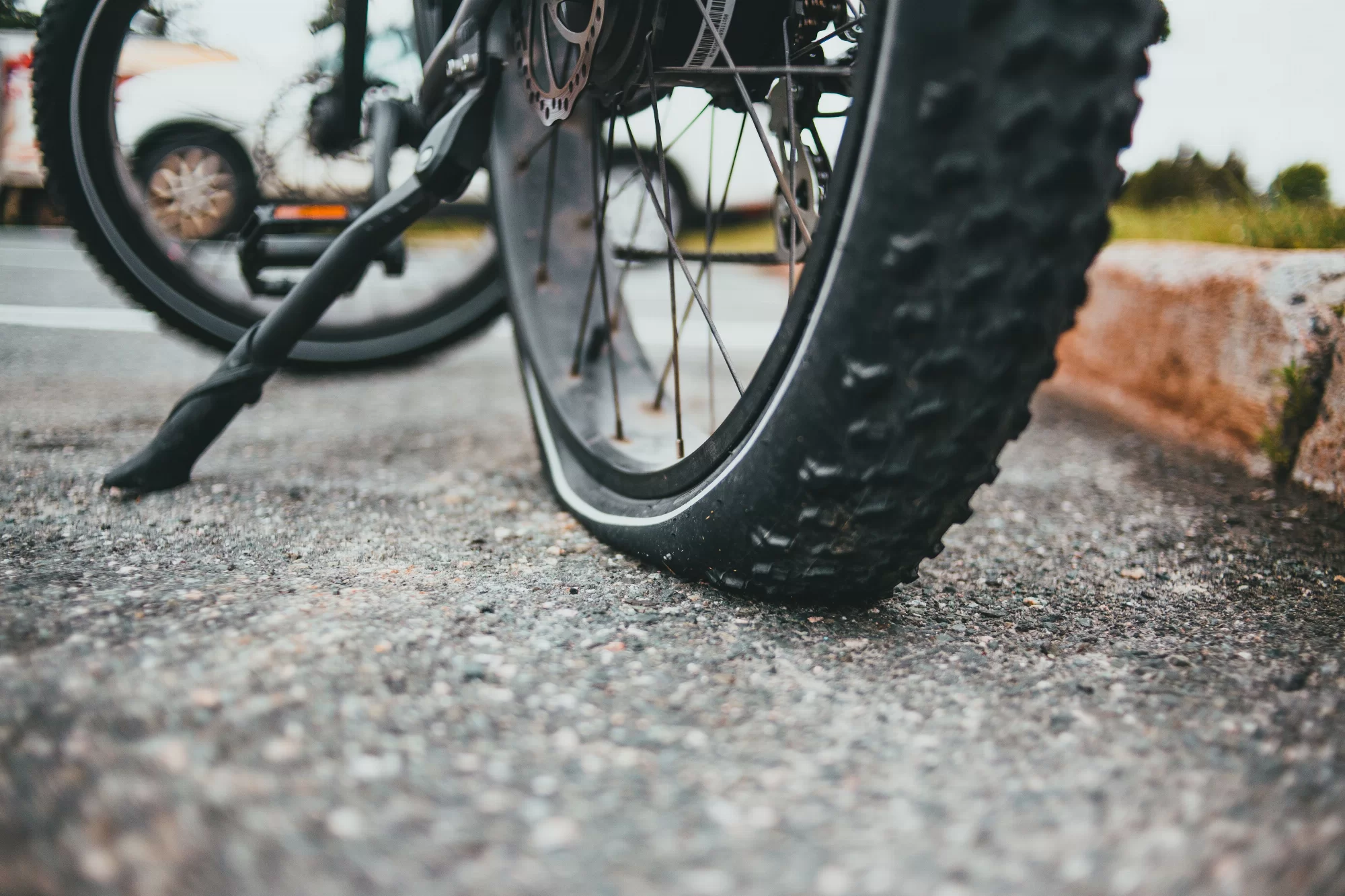
You hear a hiss, the bike begins to feel heavy, and the rear wheel starts wandering beneath you. Do not panic or keep riding. This flat tire bike repair guide explains how to stop safely, find the puncture, patch or replace the tube, and decide when calling rental support is the better option during a ride in Cascais.
What to do as soon as the tire goes flat
Ease off the pedals and brake gradually, keeping the handlebars as straight as possible. Look behind you before moving away from traffic, then find firm, level ground where you can work without blocking a cycle lane or pavement. If you are on a busy road, walking the bike a short distance is far safer than attempting a repair beside moving cars.
Do not ride on the empty tire, even if your destination appears close. The tire can slip away from the rim, while the rim itself may strike the ground and become damaged. A straightforward puncture can then turn into a wheel repair. If you are near central Cascais, walking back towards Cascais Train Station may be sensible; farther away, use the support number supplied with the rental.
A flat tire is usually a ten-minute mechanical problem. Riding on it is how it becomes an expensive one.
Check the repair kit before removing anything
A rental bike should come with the essentials needed for a common puncture, but look through the kit before dismantling the wheel. Tomorrow's Adventure rentals include a repair kit and a support number, giving renters a practical fallback if the damage cannot be fixed beside the road. Ask for a quick explanation of the kit before setting off if you have never used tire levers or a compact pump.
The exact contents can vary with the bike, so identify what you have. A useful roadside kit normally contains some combination of:
We keep a full range of sizes — plus a few e-bikes for windier days — at the station, if you'd rather ride than walk between these spots.
See Our Bikes →- Tire levers for lifting the tire bead over the rim
- A patch kit or a spare inner tube of the correct size
- A compact pump suited to the bike's valve
- A tool for removing the wheel if it does not have a quick-release mechanism
- The rental support number and basic bike identification details
If the bike has an unfamiliar axle, internal gears or an electric motor connected to the affected wheel, call support before forcing anything. The quickest cycling emergency solution in Portugal is sometimes knowing when not to improvise.
How to complete a roadside flat tire bike repair
First identify which tire is flat. For a rear-wheel puncture, shift onto the smallest rear sprocket before removing the wheel; this gives the chain more slack and makes refitting easier. Release the brake only if the particular brake design requires it, then open the quick release or axle according to the instructions provided with the rental.
- Remove one side of the tire. Let out any remaining air. Place a tire lever beneath the bead, hook it over the rim and work around until one side is free. Avoid using keys, screwdrivers or other sharp objects.
- Take out the tube. Remove the valve from the rim first, then pull out the rest of the inner tube. Keep track of how the tube sat inside the tire because the hole's position can help locate the cause.
- Find the puncture. Add a little air and listen for escaping air. If the hole is not obvious, move the tube close to your cheek, where a faint stream is easier to feel.
- Inspect the tire carefully. Match the puncture's position with the corresponding part of the tire. Look for glass, wire or a sharp stone. Do not sweep a bare finger forcefully around the inside because the object that caused the puncture may still be sharp.
- Patch or replace the tube. Follow the patch kit instructions, allowing adhesive to become tacky if required. A spare tube is usually quicker: add just enough air to give it shape, insert the valve straight through the rim, and place the tube inside without twisting it.
- Refit and inflate. Push the tire bead back onto the rim using your hands, taking care not to trap the tube. Inflate gradually and check both sides to confirm the bead sits evenly. Reinstall the wheel securely and reconnect the brake if you released it.
Before riding away, spin the wheel and apply the brake. The wheel should rotate freely without wobbling, rubbing or trying to leave the frame. Ride slowly for the first minute and stop again if the tire softens.
Most of what's covered here is easiest to reach by bike. We're right at the train station whenever you're ready to grab one.
Rent a Bike →How to tell whether the problem is more than a puncture
A patch cannot solve every failure. Call the rental support number if the tire has a large cut, the valve has torn away from the tube, the rim is bent, spokes are broken or the replacement tube immediately loses air. The same applies if you cannot remove the wheel confidently or lack a safe place to work.
Take a photograph of the damage and share your location as precisely as possible. A dropped map pin is more useful than saying you are somewhere along the coast. Include the bike number if one was supplied. This helps the rental team understand whether you need repair advice, a replacement component or collection.
A mechanical breakdown is not the same as a medical emergency. In Portugal, call 112 after a serious collision, for a significant injury or when someone is in immediate danger. Use the rental support number for an ordinary puncture or bike fault.
Reduce the chance of another puncture
Most roadside flats come from sharp debris, low tire pressure or a tube pinched during installation. Before leaving Cascais, squeeze both tires and ask for a pressure check if either feels noticeably soft. While riding, avoid broken glass, deep potholes and the loose grit that collects at road edges. Do not jump hard onto kerbs with a loaded bike.
Renting a bike here takes about two minutes at the counter, and it's usually the fastest way to actually do what's described above.
Book a Bike →After repairing a flat, inspect the tire again at the next convenient stop. If it is losing pressure, do not continue simply because it still rolls. Call support while you have battery, daylight and a clear location rather than waiting until the wheel is completely empty.
A puncture can feel intimidating on a rental because the bike and tools are unfamiliar. In practice, a calm stop, a careful tire inspection and the supplied repair kit resolve many flats. For anything less straightforward, the support number is part of the equipment too—and often the smartest tool you are carrying.