A Cascais menu may offer ten Portuguese wines and no familiar grape names. This beginner-friendly Portuguese wine guide explains three regions you will see repeatedly—Vinho Verde, Alentejo and Douro—and matches them with the grilled fish, shellfish, meat, cheese and petiscos visitors actually order here. You do not need tasting notes or specialist vocabulary. Start with freshness, richness and how the dish has been cooked.
Why Portuguese wine labels can feel unfamiliar
Portugal has hundreds of native grape varieties, often blended together rather than promoted individually on the front label. For a beginner, the region is usually the most useful clue. It tells you more about the likely character of the bottle than trying to memorise grapes such as Arinto, Antão Vaz, Touriga Nacional or Loureiro after one afternoon.
Restaurant staff may ask whether you prefer something light and crisp or rounder and fuller. That is a better conversation than pretending to recognise every label. Mention what you are eating, give a comfortable price range and ask for a local recommendation. A restaurant's house wine can also be a sensible choice, particularly at an informal lunch.
Pair the weight of the wine with the weight of the plate: delicate with delicate, richer with richer.
Start with Vinho Verde for lighter coastal food
Vinho Verde comes from north-west Portugal; the name refers to the region and youthful style, not a green-coloured wine. Many examples are light, highly refreshing and sometimes gently spritzy, although bottles made from Alvarinho can feel fuller and more serious.
A private tour covers this route without you having to think about logistics — just show up and go.
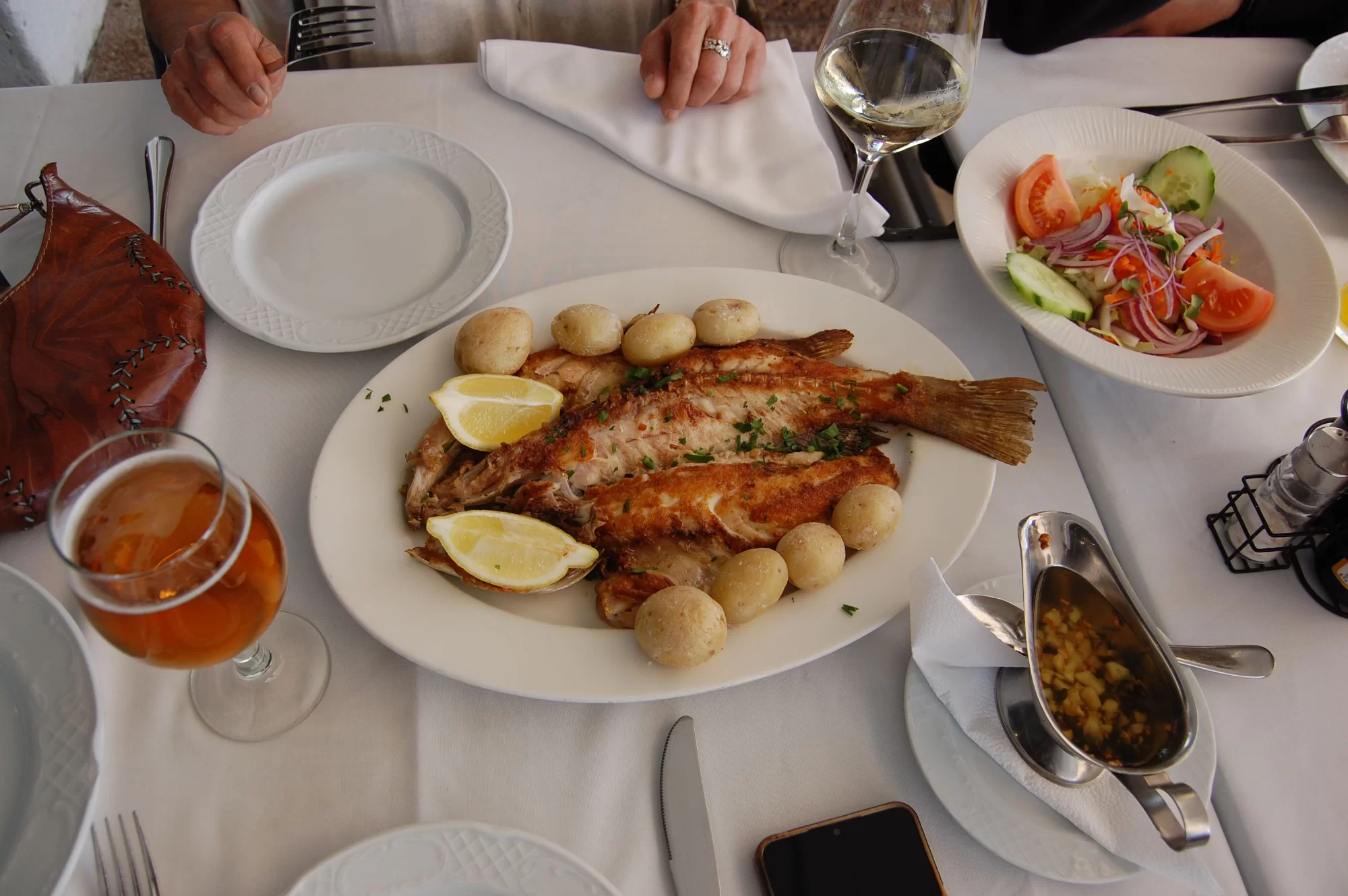
Book a Tour →This is my first recommendation for a sunny Cascais lunch. Its lively acidity works well with grilled dourada or robalo, prawns, clams, fresh cheese and salads dressed with olive oil. It also handles salty snacks better than a heavy, oaky white. If the dish includes a rich cream sauce, however, choose a more substantial white rather than the lightest Vinho Verde on the list.
Choose Alentejo for generous, comforting dishes
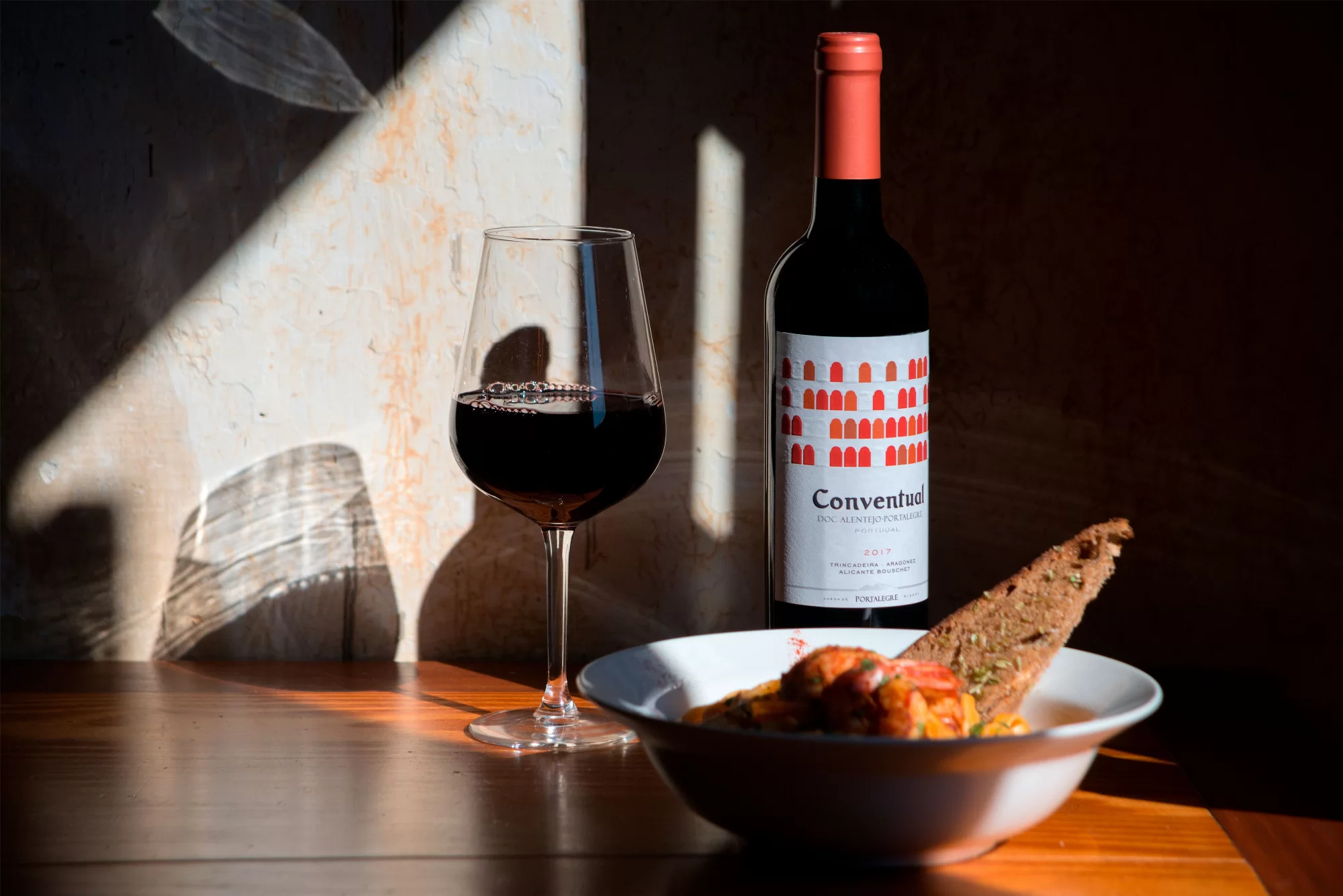
Alentejo, in southern Portugal, is known for warm conditions and wines with ripe, approachable fruit. Its reds often feel rounded and generous, making them easy choices for visitors who normally drink softer Spanish or New World reds. Alentejo whites can also be broad enough for richer fish, bacalhau and roast chicken.
Think of Alentejo for pork, a bifana sandwich, piri-piri chicken, grilled sausages or aged cheese. A red with moderate body also suits a prego, the popular steak sandwich found in cafés. If you see Vinho Verde, Alentejo and Douro together on a short list, Alentejo is usually the safest middle ground for a mixed table where meat and richer fish dishes arrive at once.
This is one of the routes our driver-guides know particularly well, if you'd rather sit back and let someone else handle the day.
Explore Tours →Save Douro wines for deeper flavours
The Douro is famous for Port, but it also produces excellent dry table wines. Douro reds commonly have dark fruit, structure and enough intensity for beef, lamb, slow-cooked meat or strongly flavoured cheese. They can overpower a simply grilled fish, so do not choose the grandest red merely because it sounds impressive.
White Douro deserves more attention than it receives. A textured Douro white can accompany octopus, salt cod or fish served with potatoes and plenty of olive oil. For dessert, Port makes more sense than a dry red: try a modest glass with firm cheese, chocolate-based sweets or a nutty dessert. With pastéis de nata, a younger tawny-style Port is generally a more comfortable match than a muscular vintage bottle.
If you'd rather skip the parking and the timing altogether, this is exactly the kind of day our driver-guides run regularly.
See Private Tours →A simple pairing cheat sheet for Cascais
- Grilled white fish or prawns: light Vinho Verde or a crisp Portuguese white.
- Bacalhau, octopus or richer fish: fuller Alentejo or Douro white.
- Pork, chicken or steak sandwiches: rounded Alentejo red.
- Beef, lamb or aged cheese: structured Douro red.
- Dessert or a final cheese course: a small glass of Port.
Cycling is a particularly enjoyable way to explore Cascais cafés and coastal lunch stops, but plan the wine for after the ride. Rent a bike earlier in the day, follow the seafront or cycle towards Guincho, return it, and then settle in for dinner without mixing alcohol and traffic. On wet days, or if a wine-focused meal is farther away, a taxi or private transfer is the more sensible option.
Good wine pairing in Portugal is less formal than the labels suggest. Pick Vinho Verde for freshness, Alentejo for warmth and versatility, and Douro for depth. Then pay attention to the plate in front of you. A straightforward regional wine that suits lunch will give you far more pleasure than an expensive bottle chosen for status alone.