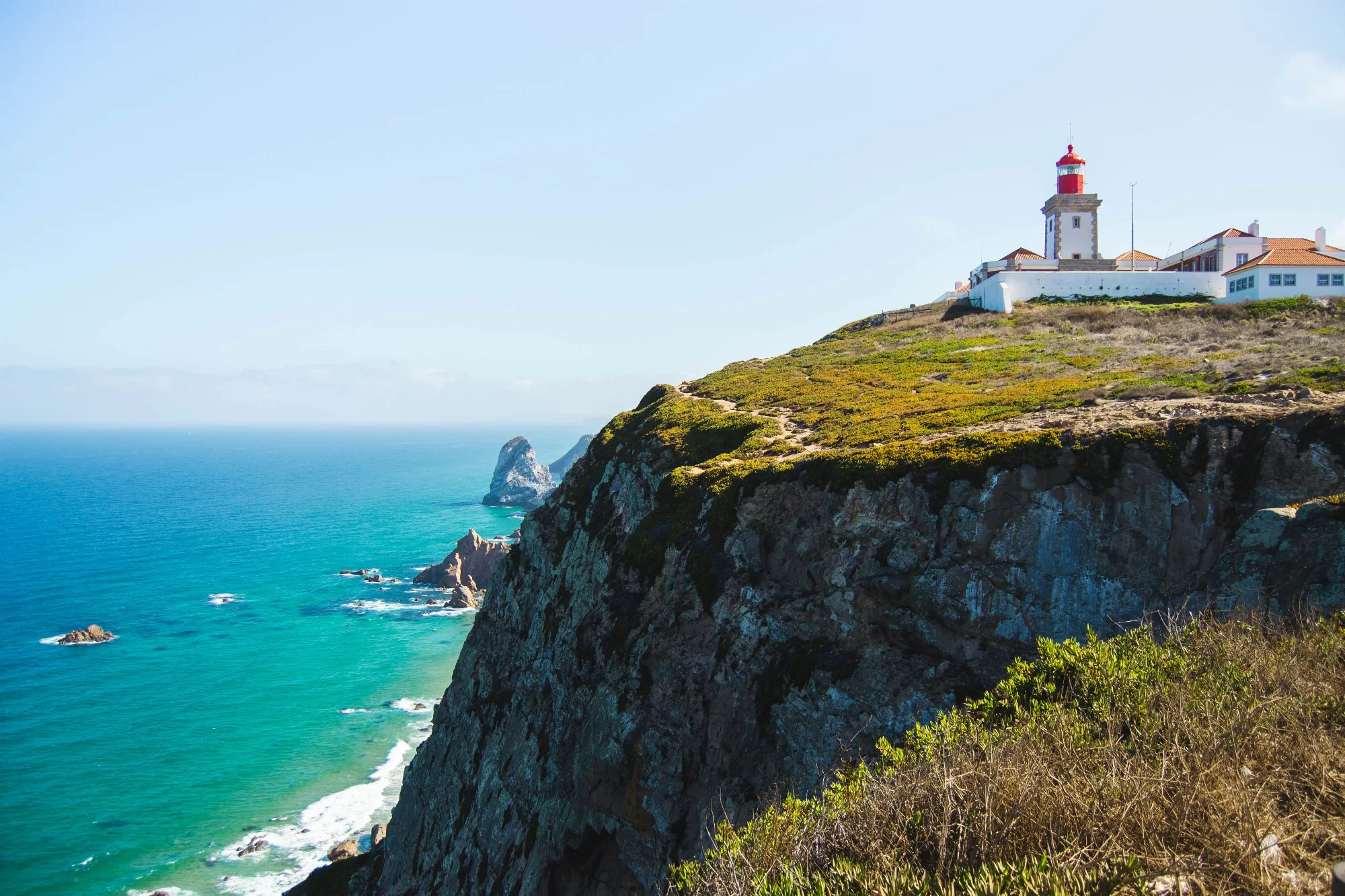
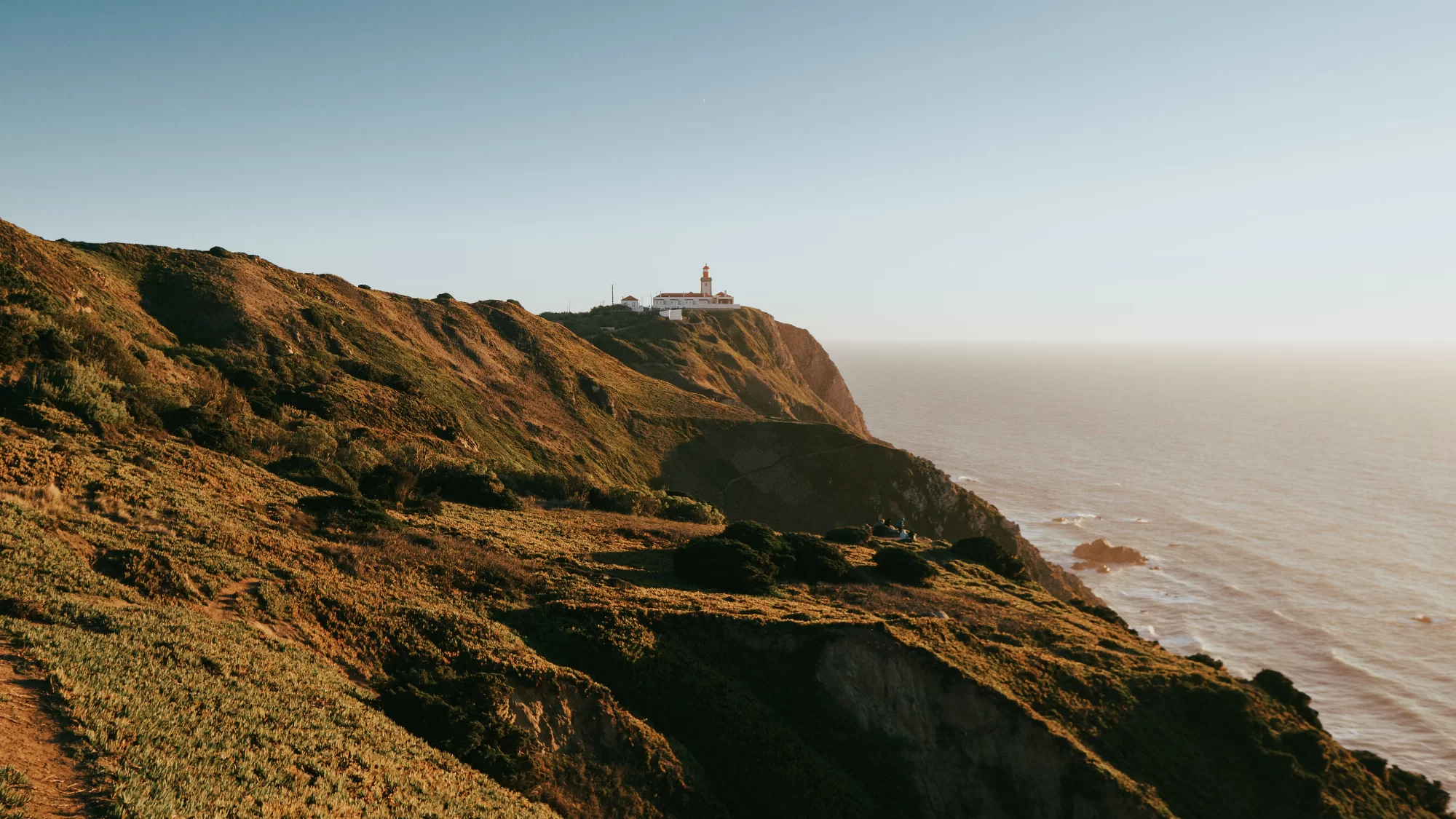
Stand near the monument at Cabo da Roca and the Atlantic is roughly 140 metres below you, breaking against cliffs that continue north and south as far as the weather allows you to see. This guide explains what is actually at mainland Europe’s westernmost point, what to expect from the lighthouse and certificate, and why most visitors should allow 30–45 minutes rather than planning half a day.
Why Cabo da Roca feels more dramatic than it looks in photos
Cabo da Roca is not a polished attraction packed with things to do. Its appeal is simpler: scale, exposure and location. The headland projects into the Atlantic, with steep cliffs dropping towards restless water and very little between you and the horizon. On a clear afternoon, the light can be beautiful. Under low cloud, the same place feels raw and slightly severe.
The wind is often the detail photographs fail to communicate. Even when Cascais or Sintra feels warm, the cape may be cool enough for a jacket, with gusts strong enough to make holding a phone steady surprisingly difficult. That exposed weather is part of the experience, not an inconvenience to be edited out. Cabo da Roca is at its best when you arrive expecting a wild headland rather than a conventional sightseeing complex.
The reason to visit Cabo da Roca is not the number of attractions; it is the sudden feeling that the continent has run out beneath your feet.
What you actually see at Cabo da Roca
The best-known feature is the stone monument marking the cape’s position. Its inscription includes the famous line by Portuguese poet Luís de Camões describing the place where the land ends and the sea begins. This is the classic photograph, although the surrounding cliffs and Atlantic views are more memorable than the monument itself.
Nearby, the Cabo da Roca lighthouse stands inside a working lighthouse complex. The white buildings and red lantern provide a strong focal point against the open sky, but visitors should not expect a museum-style tour or regular access to the tower. Think of the Cabo da Roca lighthouse as part of the working character of the cape rather than an attraction you explore from the inside.
A private tour covers this route without you having to think about logistics — just show up and go.
Book a Tour →There are viewpoints and paths around the main area, yet this is not the place for casual wandering close to the edge. Barriers and marked areas exist for a reason. Some sections of ground can be uneven, dusty in summer and slippery after rain, while the cliffs may be unstable beyond protected viewpoints. Sensible shoes make a noticeable difference, even during a short stop.
Is it really Europe’s westernmost point?
Cabo da Roca is the westernmost point of mainland continental Europe. That qualification matters because Portuguese islands in the Azores lie much farther west. The cape’s geographical claim is still significant: you are standing at the outer edge of the European mainland, around 40 kilometres west of central Lisbon as the crow flies.
A certificate marking the visit is normally available to buy from the tourist information facilities at the site. It is a traditional souvenir bearing your name and recording that you reached mainland Europe’s westernmost point. Availability, designs and prices can change, so treat it as an optional keepsake rather than the main reason to go. If you want one, factor in a few extra minutes in case other visitors have the same idea.
How much time should you allow at the cape?
For most people, 30–45 minutes is enough. That gives you time to see the monument, look towards the lighthouse, take photographs from more than one viewpoint and buy a certificate if the facility is open. Cabo da Roca works well as a focused stop within a day around the Sintra-Cascais Natural Park; stretching it into a long visit can feel unnecessary unless you plan a proper coastal walk.
This is one of the routes our driver-guides know particularly well, if you'd rather sit back and let someone else handle the day.
Explore Tours →Allow closer to an hour if you enjoy photography, want to move slowly over uneven ground or arrive near sunset. Fog can change the calculation. If visibility is almost nil, waiting briefly may help because Atlantic cloud sometimes shifts quickly, but there is no guarantee that the cliffs will emerge. During busy periods, extra time may also be lost finding a clear space around the monument.
- Quick stop: 20–30 minutes for the monument, main viewpoint and lighthouse photographs.
- Comfortable visit: 30–45 minutes for several viewpoints and the certificate.
- Photography or sunset: Around one hour, with additional time to arrive before the best light.
- Coastal walking: Plan separately and prepare for exposed, uneven terrain rather than treating it as an extension of the viewpoint stop.
How to prepare for the wind, crowds and exposed cliffs
Bring a light outer layer even on a sunny day, and avoid loose hats unless they can be secured. Sunglasses help with glare and blowing dust. In wet weather, footwear with grip matters more than an umbrella, which is rarely useful in strong coastal gusts. Families should keep young children close at all times rather than relying on barriers to define every safe area.
If you are exploring from Cascais by rental bike, Cabo da Roca makes a rewarding goal for confident cyclists. The arrival feels earned, and cycling lets you experience the changing coast rather than seeing only the final viewpoint. This is a hilly, exposed ride, however, with wind capable of making the return harder than expected. It is not the best first ride for someone who has only cycled along the flat Cascais seafront. Check the forecast, choose a suitable bike and carry water; riders uncomfortable with hills or traffic will be better served by a guided outing or transfer.
Crowds tend to cluster around the monument and the first viewpoint. Walking a short distance within the designated areas often produces a cleaner view and a calmer moment. Sunset is atmospheric, but the temperature drops quickly once the sun lowers, and visibility around uneven paths becomes poorer. Leave enough daylight to return safely to your transport.
If you'd rather skip the parking and the timing altogether, this is exactly the kind of day our driver-guides run regularly.
See Private Tours →Is Cabo da Roca worth visiting?
Yes, provided you understand what it is. Cabo da Roca is worth visiting for the cliffs, Atlantic atmosphere and geographical significance, not for a long list of attractions. Travellers who love coastal scenery usually find it memorable; anyone expecting shops, extensive exhibitions or several hours of entertainment may leave underwhelmed.
The strongest plan is to give the cape a clear place within a wider day rather than making it the whole day. Spend 30–45 minutes absorbing the view, photograph the Cabo da Roca lighthouse, collect the certificate if it appeals to you and respect the weather. The stop is brief, but on a clear, windy day the sense of standing at the edge of mainland Europe stays with you much longer.